Raza Meets the King

It was a very special day and so Raza was wearing his best clothes. Today, he was going to meet someone very important – His Majesty Jalaluddin Akbar, the great Mughal king! Raza's father Rahmat Khan was an important man too. He was the royal tailor to the king, and he stitched all his angarakhas – the loose coats that the king wore over his tight churidar pyjamas. This morning they were going to the palace in Fatehpur Sikri with the angarakhas the king had ordered for summer. The king was very fussy about his clothes and it was very hard to please him. Rahmat Khan had worked hard to make the angarakhas – cutting and stitching late into the night. Raza had helped too – putting in tiny stitches using the finest needle and the best silken thread. The spring sun shone brightly, the flowers smiled, and the pigeons cooed happily as the two of them walked to the fortress of Fatehpur Sikri. Two soldiers holding spears stood guarding the gate. “I'm Rahmat Khan,” Raza's father said, “I'm the angarakha maker to His Majesty and I've brought new sets for him.” “Is His Majesty expecting you?” the guard with big moustaches asked. “Ji huzoor. He chose the designs himself.” “Wait here,” the guard turned to go inside, “I'll call the Royal Steward.”

After a while the guard returned with another man. Rahmat bowed to him. “I've brought the summer clothes, Dhaniji,” he said. “Good! Come with me. His Majesty is still in his sleeping chamber. He'll see you before he leaves for the royal court.” As they walked in, Raza whispered, “Who is he, Abbu?” “Dhani Singh. He works in the Khwabgah.” “Khwabgah?” “The king's personal palace, where he has his sitting room and bedroom.” It was a long walk. Raza looked around, his eyes wide with wonder. The Mughal palaces were so beautiful! All made of red sandstone with slim carved pillars and curving arches. In between were gardens filled with flowers, lily pools and sparkling fountains. Raza thought he was in heaven. As they waited at the door of the king's bedroom, Raza studied Dhani Singh. Being a tailor's son, he noticed the clothes first. Dhani Singh was wearing a cotton angarakha in a red and white flowery print over white churidars. His nagra shoes had pointed toes that curved inward. He had tied a narrow cloth belt, a patka, at his waist. What Raza liked most was his bright red turban, printed with a design in white and yellow squares and dots.

“Your turban is very nice, Dhaniji,” he said, “that's a really pretty design!” “Thank you! I come from the land of the Rajputs and... this design, called bandhani, is from my homeland.” As they entered the room, Raza's heart was thudding. Sunlight poured in through the arched doorways, lighting up the thick silken Persian carpet woven in jewelled colours. The room was furnished with a beautifully carved bed and exquisite chairs. There were silk and gold cushions on the low bed. Even the curtains were made of silk! Raza bowed and then looked at his king. Akbar was choosing jewellery from a box held before him by a servant. He was not very tall but he had the broad shoulders of a sword-fighter. He had large, slightly slanted eyes, a drooping moustache, and a small mole above his lips. Hearing them enter, Akbar turned and smiled, “Ah Rahmat! You've brought the angarakhas? And who is this boy with you?” “My son Raza, huzoor.” “And can you stitch too, Raza?” “I'm learning, huzoor,” Raza replied nervously, “but I still make mistakes in cutting the cloth.” “You'll learn. Your father will teach you,” Akbar said gently. Rahmat opened the bundle and laid out the angarakhas on the bed.

They were made of the finest muslin and covered with delicate embroidery. All of them were in light summery colours – cream, lemon, pale blue, green and a sparkling white. Raza knew the king's favourite colour was white. Rahmat helped Akbar put on a white angarakha. Then Dhani Singh brought a large mirror and held it before the king. “I like the embroidery... and it fits well too,” Akbar said, looking pleased. “Now tie a patka. Let's see how it looks.” Rahmat took out a handful of belts and tied a light blue one around Akbar's waist, letting the fringed ends hang in front. “No...” said Akbar moodily, “this is too pale... I want something brighter.” Raza and his father then tried one patka after another – green and yellow, orange and purple, but nothing pleased Akbar. “I don't like any of the colours, Rahmat!” Akbar said, frowning impatiently. Raza saw that his father was beginning to look worried. Oh no! If His Majesty did not like the patkas, would he send all the clothes back? “I have to do something fast!” Raza thought. He looked around and said suddenly, “Huzoor, would you like to try a bright red one with a white and yellow design?” “What kind of red?” Akbar boomed. “Show me!” Raza pointed to Dhani Singh's turban, “That red?” “Hmmm...” Akbar stared thoughtfully at Dhani Singh's moustached face and said, “Let me give it a try.”

In a flash, Raza had taken off Dhani Singh's turban, unrolled it and tied it around Akbar's waist. He waited with bated breath while Akbar studied his reflection in the mirror. He noticed Dhani Singh grinning widely – he must have been amused to see the king wearing his turban as a belt! “I like the colour... and a new design too!” Akbar said finally. “Bandhani, huzoor... from the land of the Rajputs,” said Raza promptly. “Aha! Rajput like my queen, Jodh Bai!” Akbar began to smile. “Dhani, pay Rahmat for the angarakhas and patkas. I'll take them all!” “Huzoor,” asked Raza cautiously, “Dhaniji needs a turban. We've taken the one he was wearing.” “Give him a patka!” laughed Akbar. “That boring pale blue one. I am keeping his turban.”

FUN FACTS OF HISTORY 1. Raza lived during the reign of King Akbar over 400 years ago. Akbar was the greatest king of the Mughal dynasty. He was also a famous warrior. He loved wearing clothes with new designs. He also enjoyed flying kites and eating mangoes! 2. Babur, the founder of the Mughal dynasty, was the king of Kabul. He invaded India in 1526 and defeated the Sultan of Delhi, Ibrahim Lodi, at the Battle of Panipat. Akbar was Babur's grandson. He was an equally successful general and never lost a battle during his 49-year rule. 3. Two Mughal kings built new cities. Akbar built Fatehpur Sikri near Agra and Shahjahan built Shahjahanabad in Delhi. Fatehpur Sikri lies empty today but Shahjahanabad (present-day Old Delhi) is full of life and people.

4. Shahjahan's famous Peacock Throne was a square flat seat, with slim pillars at each corner covered with precious jewels. The seat had a canopy, which had the figure of a peacock studded with gems on top of it. The emperor sat under the canopy, leaning against silk cushions. 5. Many Mughal princesses were highly educated. Gulbadan Begum wrote the biography of her father, Babur. Shahjahan's daughter Jahanara was a poet. 6. The Mughal fort had many kitchens. Each kitchen sent food for the king. So when he sat down to eat, he would have as many as thirty dishes to choose from! Lip-smacking Mughlai cusine, which includes yummy dishes like biryani, pulao, kalia and korma, originated in these kitchens.
Parents’ picks
A few books & things we love that pair with our stories. As an Amazon Associate, StoryMom may earn from qualifying purchases — at no extra cost to you.
 📖 BookPanchatantra TalesIllustrated collectionIndia's timeless animal fables — a moral in every story.View on Amazon →
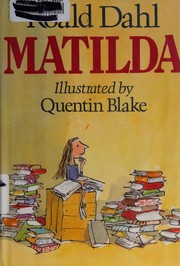 📖 BookMatildaRoald DahlA book-loving heroine who stands up for what's right.View on Amazon →
 📖 BookAmar Chitra Katha (set)Classic Indian comicsMythology and history in vivid comic form — a shelf they'll return to for years.View on Amazon →