Sailing Home

Basava and his sister Sundari sat on the sand watching the sun rise over the sea. Slowly, the sky turned from grey to blue and the edges of the clouds became an orange colour. They sat staring at the horizon – that line in the distance where the bowl of the sky seemed to curve down to meet the sea. Their father was a sailor who had sailed away on a merchant ship many months ago. The children were eagerly waiting for him to come back home. So, every morning at sunrise, they came and waited by the beach hoping to see the tall red sails of their father's ship rise slowly above the horizon. The children had seen many ships come and go because they lived in Mamallapuram, which was a busy port. The ships came from many distant lands carrying exciting cargo – chests of silk and pottery, jars full of wine, perfumes and even horses. Their father's ship had sailed out carrying logs of cedar and sandalwood, and bags of spices, rice and ghee. “It's been so many months,” Sundari said sadly, “Appa has never been away for so long.” “Remember that big storm last week?” Basava added worriedly, “The sea was full of high waves. I hope Appa's ship is safe.”

“Look, a ship is coming!” said Sundari excitedly, “But I can't see the sails.” As they watched eagerly, a ship appeared on the horizon. It was a small dot that slowly grew larger as it came closer. First, they saw the sails filling out with the wind. Then the high masts and the wooden bow rose into view. “No,” said Basava, disappointed, “Appa's ship has red sails with a flying eagle painted on them. This one has black and green sails.” They felt disappointed and decided to go home. They had work to do — they had to help their mother at her vegetable stall in the market. Their father was often away from home and after a while all the money he left behind would get over. That is why their mother sold vegetables, so that they had enough to eat. Sundari enjoyed working at the vegetable stall. The market was such an interesting place! Often their customers were sailors from different lands – some with pale skins and narrow tilted eyes and some with dark skins and curly hair. They wore odd clothes and jewellery and spoke in languages Sundari could not understand at all!

This morning, as Basava was laying out bundles of spinach and cabbage, one of their regular customers came to buy vegetables. She was the wife of a trader who often sent spices to other lands by ship. She knew all about the ships coming and going from Mamallapuram. As she picked through the radishes and beans, the trader's wife asked, “Any news of your father?” Sundari shook her head sadly. “Why don't you go and ask at the jetty where all the ships are anchored?” she said. “Ask what?” Basava leaned forward eagerly. “Ask the sailors if they have seen your father's ship on their way to Mamallapuram. My husband does that quite often when his ships are late.” That afternoon, the children headed towards the main jetty. They went through the market and took the street going towards the sea. They went past the warehouses where the merchants kept the goods meant to be loaded into ships. In one warehouse, labourers were unloading bags of pepper and coriander seeds. In another, they were stacking up bales of cotton cloth woven in bright colours.

Three ships stood anchored at the jetty, tied to the shore by thick ropes. Two more ships were waiting out at sea. Small boats were moving in and out among them with the boatmen selling everything from flowers and fruits to beads and woodcarvings. Among the ships anchored at the jetty was the ship with the black and green sails that they had seen in the morning. They went towards a ship that was being loaded with goods. As they neared it, a soldier carrying a spear stopped them. “Halt! Watch where you are going!” the man yelled. “No one is allowed on this ship without a royal permit.” “Permit?” Sundari looked puzzled. “Why?” “Because it is a royal ship, you silly girl!” “You mean this ship belongs to the royal navy?” Basava's eyes widened in surprise. “Are we going to war?” “Of course not! This is a trading ship. His Majesty King Narasimha Varman owns many ships that trade with far off kingdoms. This one is going to the port of Tamralipti in the north.” “We are looking for a ship that has come from the kingdom of Kamboja...” Sundari began hesitantly.

“Our father is a sailor and he sailed for Kamboja many months ago. We want to ask the sailors if they have seen his ship.” “Kamboja?” the soldier asked. He then pointed to the ship with the black and green sails and said, “That ship's arrived from there.” Basava and Sundari ran to the ship, up the gangplank and on to its deck. They stopped when they saw that all the sailors on board were foreigners. They were speaking to each other in a strange tongue! “Oh no!” Basava sighed. “How do we make them understand us?” “Easy!” Sundari grinned. “We talk to them like Amma does when they come to buy vegetables.” “Of course!” laughed Basava, “We act and make signs with our hands.” They looked around trying to spot a sailor with a friendly face. Finally, they went up to a sailor sitting on a roll of rope. He was an old man with a dark, leathery, sunburnt face. There were deep lines around his narrow eyes. He wore loose pyjamas, a sleeveless jacket, bright bangles and earrings. “Kamboja?” Sundari asked nervously. The man nodded happily, “Kamboja!” Basava pointed to the sail, then he pointed to the red skirt Sundari was wearing and said, “Ship? Red sail?” The man frowned and shook his head. Sundari tried to explain. She tapped the side of the ship and said, “Ship?” Then she pointed to the sails and to her skirt, “Sail? Red?” The man pointed to the sea and said something in his own language. “Yes! A ship with red sails. Have you seen it?” Sundari asked excitedly. The man looked a bit puzzled. “Our father... Appa!” Sundari was acting out a tall man with a moustache. “Oh!” The man then flapped his arms to mimic a bird flying. “YES!” the children jumped and yelled in delight, “A flying eagle is on the sail!” The man was laughing as he stood up and pulled them by their hands to the other end of the ship. Then he pointed to the horizon where a ship was slowly sailing towards them, its red sails blowing proudly in the breeze. Basava and Sundari were speechless! There, before their eyes, were the familiar high masts, the curving prow, the red sails with flying eagles... “Your Appa is a sailor?” the man asked gently, looking at their delighted faces. “Is he on that ship?” “Oh!” The children stared at him in disbelief. “You can speak our language!” Sundari exclaimed. “A little bit,” the man laughed. “I come to Mamallapuram often. But I did enjoy your acting, especially ‘the tall man with the moustache' part!” Basava and Sundari taught their sailor-friend many new words as they stood at the jetty, waiting happily for the ship to come home.

1. Basava and Sundari lived over 1200 years ago in the kingdom of King Narasimha Varman of the famous Pallava dynasty. The Pallava kingdom extended over present-day Tamil Nadu. 2. The town of Mamallapuram is near Chennai and is famous for its temples. At one time, it was a port from where ships sailed to Cambodia, Burma and Indonesia. Kamboja is the ancient name of Cambodia and Tamralipti was a port in Bengal.

3. What did children study in school in the Pallava times? The subjects included logic, law, mathematics, grammar, astronomy, philosophy, the Vedas, economics and politics. 4. Women, especially of noble families, were educated, but were not allowed to study the Vedas. 5. People in the Pallava times dyed their hair, used scented hair oil and perfumes. They even used toothpicks after their meals!
Parents’ picks
A few books & things we love that pair with our stories. As an Amazon Associate, StoryMom may earn from qualifying purchases — at no extra cost to you.
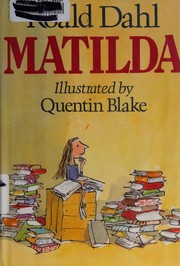 📖 BookMatildaRoald DahlA book-loving heroine who stands up for what's right.View on Amazon →
 📖 BookAkbar & Birbal StoriesIllustrated collectionClever, funny wisdom tales from the Mughal court — a bedtime favourite.View on Amazon →
 📖 BookPanchatantra TalesIllustrated collectionIndia's timeless animal fables — a moral in every story.View on Amazon →